Where should you stay in Cappadocia?
Most travellers base themselves in Göreme, the village closest to the balloon launch fields and the Open Air Museum. Uçhisar sits higher and quieter, Ürgüp is larger with more restaurants and wine houses, and Ortahisar and Avanos stay village-calm. All of them are within a short drive of one another.
Cappadocia is a region rather than a town. It spreads across Nevşehir province, roughly an hour by road from Kayseri Erkilet Airport (ASR) and about forty-five minutes from Nevşehir Kapadokya Airport (NAV). Choosing a hotel here therefore means choosing a village: the distances between them are small, but the atmosphere, the noise level and the view from your terrace are not.
One practical detail decides more than most people expect. Balloon operators collect passengers from their hotels well before dawn, so where you sleep sets how early your alarm rings and how long you sit in a minibus in the dark. Göreme is usually the shortest hop to the launch fields.
Göreme, Uçhisar, Ürgüp or Ortahisar: which town is best?
Choose Göreme for walkable restaurants, easy tour pickups and the shortest transfer to a sunrise flight. Choose Uçhisar for panoramic quiet beneath its rock castle, Ürgüp for a larger town with shops and wine houses, Ortahisar for a lived-in local village, and Avanos for pottery workshops beside the river.
Göreme sits inside Göreme National Park and the Rock Sites of Cappadocia, on the UNESCO World Heritage list since 1985. Its hotels climb the hillsides in terraces, which is why so many rooms look straight out at the fairy chimneys. The trade-offs are steep streets, luggage carried up steps and a busy centre in high season.
Uçhisar is built around the tallest rock formation in the region, Uçhisar Castle, and looks over Pigeon Valley toward Göreme. It is calmer after dark, with fewer places to eat late. Ürgüp is the largest of the four, better if you want a proper town with shops, cafés and local wine. Ortahisar has its own castle rock and an everyday village square, while Avanos, on the Kızılırmak — Turkey’s longest river — is the place for pottery.
What is a cave hotel, and is it worth booking?
A cave hotel is built into Cappadocia’s soft volcanic tuff, either in genuinely carved rooms or in stone-clad rooms that imitate them. Real cave rooms stay cool in summer, warm in winter and unusually quiet, but they can also be dim, slightly humid and reached only by stairs.
The rock is tuff: compacted volcanic ash, soft enough to cut with hand tools and firm enough to hold a vaulted ceiling. People here have carved houses, churches and pigeon lofts into it for centuries, and many hotels in Göreme, Uçhisar and Ortahisar are restorations of those same dwellings.
Rooms inside a single hotel can differ enormously, so read the room description rather than the hotel name. Ask whether the room has a window or only a small opening, whether there is a dehumidifier, how the heating works in winter, and how many steps stand between the entrance and the bed. Staff in most family-run hotels will carry bags, but confirm it if you travel with heavy luggage or have limited mobility.
How do you get a hotel room with a balloon view?
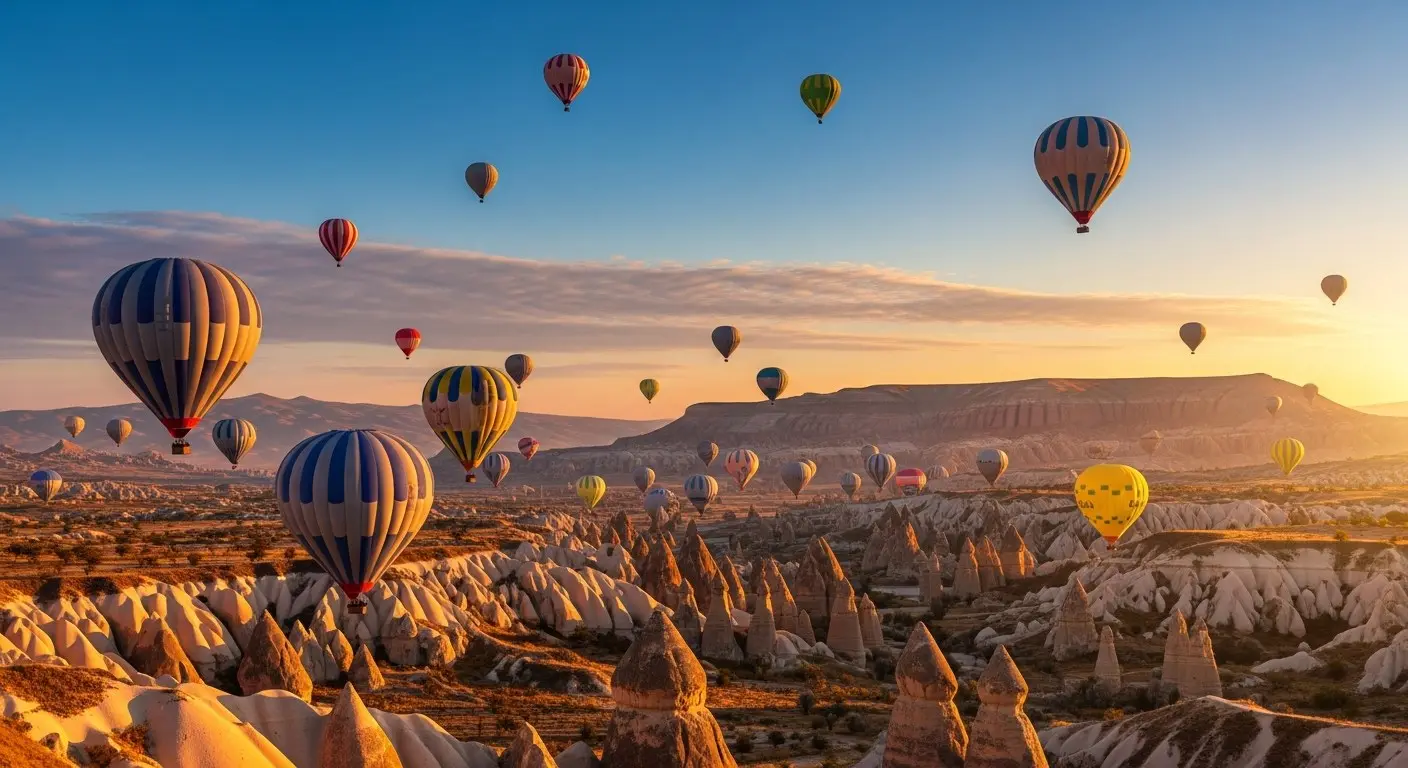
Ask for a valley-facing room or a rooftop terrace, and accept that no hotel can promise balloons overhead: they drift with the morning wind and take off only when conditions allow. Terraces in Göreme, Uçhisar and Ortahisar give the widest outlook over the launch areas at sunrise.
Balloons are inflated before first light and lift off around sunrise. In Turkey, commercial ballooning is supervised by the Directorate General of Civil Aviation (SHGM), which clears each morning’s flying on wind and visibility. If the morning is cancelled, the sky above your terrace stays empty too — worth remembering when a room is priced for its view.
If you are flying rather than watching, ask the hotel about breakfast. Pickup happens in the dark, long before the buffet opens, and most cave hotels will arrange something early or hold breakfast for your return.
When should you book, and what should you check first?
Book well ahead for spring, autumn and school holidays, when Cappadocia’s small cave hotels fill quickly. Before confirming, check the cancellation policy, stairs and luggage help, whether the room has a window, winter heating, airport transfers from Kayseri or Nevşehir, and early-breakfast arrangements on balloon mornings.
Most cave hotels are small — often a few dozen rooms at most — so the well-reviewed ones sell out earlier than a city hotel would. Flexible cancellation matters here, because balloon flights are grounded by wind or poor visibility on a fair number of mornings and plans shift with them.
For the same reason, give yourself room to breathe. Two or three nights in the region means a cancelled sunrise can be rebooked for the next morning instead of lost. Book your hotel and your flight separately but at the same time, and tell the hotel which morning you are scheduled to fly.
Frequently asked questions
Is a real cave room comfortable to sleep in?
For most guests, yes. The rock holds a steady temperature year-round and blocks outside noise almost completely. The usual complaints are low light and humidity, so if a windowless room would bother you, ask specifically for one with an arched opening or a terrace door.
Which village is best for watching the balloons from my hotel?
Göreme and Uçhisar have the most terraces facing the launch valleys, and Ortahisar offers a quieter view from slightly further back. Wind decides the flight path every morning, so treat any balloon view as a good chance rather than a guarantee.
Should I book my hotel and my balloon flight together?
They are usually booked separately, but plan them together. Reserve the flight as soon as your dates are fixed, pick a hotel that can handle a pre-dawn pickup, and keep a spare morning in your itinerary in case weather cancels the first attempt.
Ready to see the valleys from above? Reserve your sunrise hot air balloon flight over Göreme with Trip and Tick, and we will collect you from your hotel door before first light.