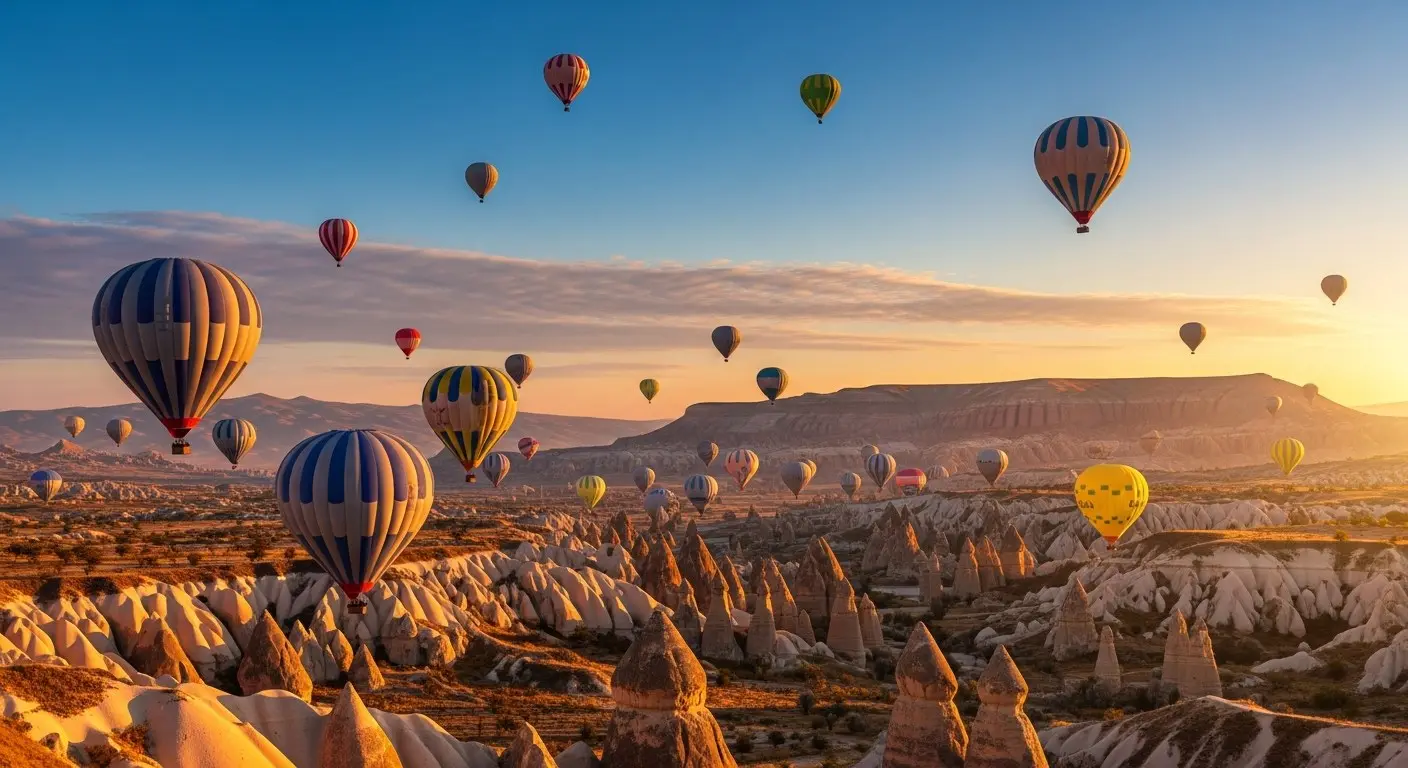
Where is Cappadocia, and how do you get there?
Cappadocia — Кападокія in Ukrainian, Kapadokya in Turkish — is a region in central Türkiye rather than a single town. It spreads across Nevşehir province around the villages of Göreme, Uçhisar, Ürgüp, Ortahisar and Avanos, and two airports serve it: Kayseri Erkilet (ASR) and Nevşehir Kapadokya (NAV).
The landscape is volcanic. Ash from Erciyes and Hasandağı hardened into tuff, a rock soft enough to cut with hand tools and firm enough to hold a vaulted ceiling. Wind and water carved the cones people call fairy chimneys; residents carved houses, churches and entire underground cities into the same stone. Göreme National Park and the Rock Sites of Cappadocia have been on the UNESCO World Heritage list since 1985.
Kayseri airport is roughly an hour by road from Göreme and Nevşehir Kapadokya about forty-five minutes, both reached by short domestic flights from Istanbul and Ankara. Overnight coaches run from Istanbul and Ankara as well. The villages sit only a few kilometres apart, so you rarely need a rental car if your hotel and tours include transfers.
Why do hot air balloons fly over Cappadocia at sunrise?
Balloons launch at first light because that is when the air is coolest and most stable. Later in the morning, thermals and wind make flying unsafe. Türkiye's civil aviation authority clears each morning individually, so every booking is conditional on that day's weather rather than guaranteed weeks in advance.
The flight is why most travellers come. Baskets inflate on the launch fields near Göreme in the dark, lift as the sky turns, and drift over Love Valley and the chimney fields while the pilot changes altitude to catch different winds. An hour aloft is the usual standard flight, and most operators end the morning with a landing-site toast and a certificate.
Weather is the one variable nobody negotiates with. When wind or visibility fall outside the limits, flights are grounded, and that call comes before dawn. A cancelled flight is refunded or rebooked, but it still costs you a morning — the strongest practical argument for arriving with a spare day.
When is the best time to visit Cappadocia?
Spring and autumn — roughly April to early June, then September into October — bring mild days and steady flying conditions. Summer is hot, but the dawn air is calm and reliable. Winter is cold and quiet, beautiful under snow, and the season with the most cancelled balloon mornings.
Spring means green valleys and blossom around Ürgüp; autumn means the grape harvest and clean light. July and August are the most dependable months to fly and the least comfortable months to walk a valley at midday. Dress for two climates in one day: the plateau sits around a thousand metres above sea level, so sunrise can be near freezing while the afternoon is warm.
Book earlier than feels necessary in high season: in July and August the popular sunrise slots and the cave hotels in Göreme go days ahead, while off season you can often secure a flight for the next morning.
Which valleys, towns and underground cities are worth your time?
Göreme Open Air Museum holds the best-preserved rock-cut churches. Uçhisar and Ortahisar castles give the widest views. Devrent, Paşabağ, Love and Pigeon valleys show the strangest rock forms, and Derinkuyu and Kaymaklı are the deepest underground cities open to visitors.
Local agencies sell two standard day tours. The Red Tour stays close to Göreme: the Open Air Museum, Uçhisar, Paşabağ, Devrent and Avanos, where potters still work clay from the Kızılırmak, Türkiye's longest river. The Green Tour heads south to Derinkuyu, the Ihlara Valley walk and Selime Monastery, and involves considerably more driving.
Leave some hours unbooked. The walk from Göreme up through Rose and Red valleys in late afternoon costs nothing and ends in the best light of the day, and watching the balloons from a hotel terrace at dawn is free on any morning you are not flying.
How do you plan a Cappadocia trip that actually works?
Give the region three nights. Put the balloon flight on your first eligible sunrise so a weather cancellation still leaves a spare morning, build valley tours around it, and stay in Göreme if you want the shortest pre-dawn transfer to the launch fields.
Pickups run well before take-off, so where you sleep decides how early your alarm rings and how long you sit in a minibus in the dark. Wear trousers and closed shoes, because you climb in and out of a basket, and bring a layer you can take off once the sun is up.
Pair the flight with an afternoon that is not another bus. ATV runs through the valleys, horseback riding — Cappadocia's name is tied to an old Persian phrase about fine horses — and pottery workshops in Avanos all fit around a sunrise slot.
Frequently asked questions
Is a hot air balloon flight in Cappadocia safe?Commercial balloon operations in Türkiye are licensed and supervised by the national civil aviation authority, and pilots hold specific balloon ratings. Flights are permitted only in a narrow window around sunrise and are grounded whenever wind or visibility fall outside the limits. The frequent winter cancellations are that safety system doing its job.
What happens if my flight is cancelled because of the weather?The decision is made in the early hours, usually before or shortly after pickup. You are then refunded or moved to another morning, depending on the operator's terms. Because rebooking depends on free seats, a trip with one spare morning is far easier to rescue than a single-night stop.
How many days do I need in Cappadocia?Two full days are enough for a balloon flight and one day tour. Three nights is the comfortable version: it absorbs a cancelled flight, leaves an afternoon for the valleys on foot, and still gives you an unhurried last morning before the drive back to Kayseri or Nevşehir.
Ready to fly? Check the next available sunrise dates and book your Cappadocia balloon flight or valley tour at Trip and Tick.